What did life feel like for the youngest creatures of the Ice Age?
This book takes you into their world—tagging along with small mammoths, curious cave lions, woolly rhinos and other ancient animals as they wander through snow, stumble into trouble, and learn to survive. It mixes what science tells us with a touch of imagination to bring their stories to life.
A Fresh Look at a Frozen World
Illustrations and atmosphere create a lively, approachable glimpse into prehistoric times.
Facts Woven Into Adventure
Real discoveries blend naturally with storytelling, making the journey fun, engaging, and quietly educational.
Written by Bohdana Jarošová, for B4U publishing.
If you’re interested in acquiring the rights to publish this book in your language, you can find more information at albatrosmedia.eu.
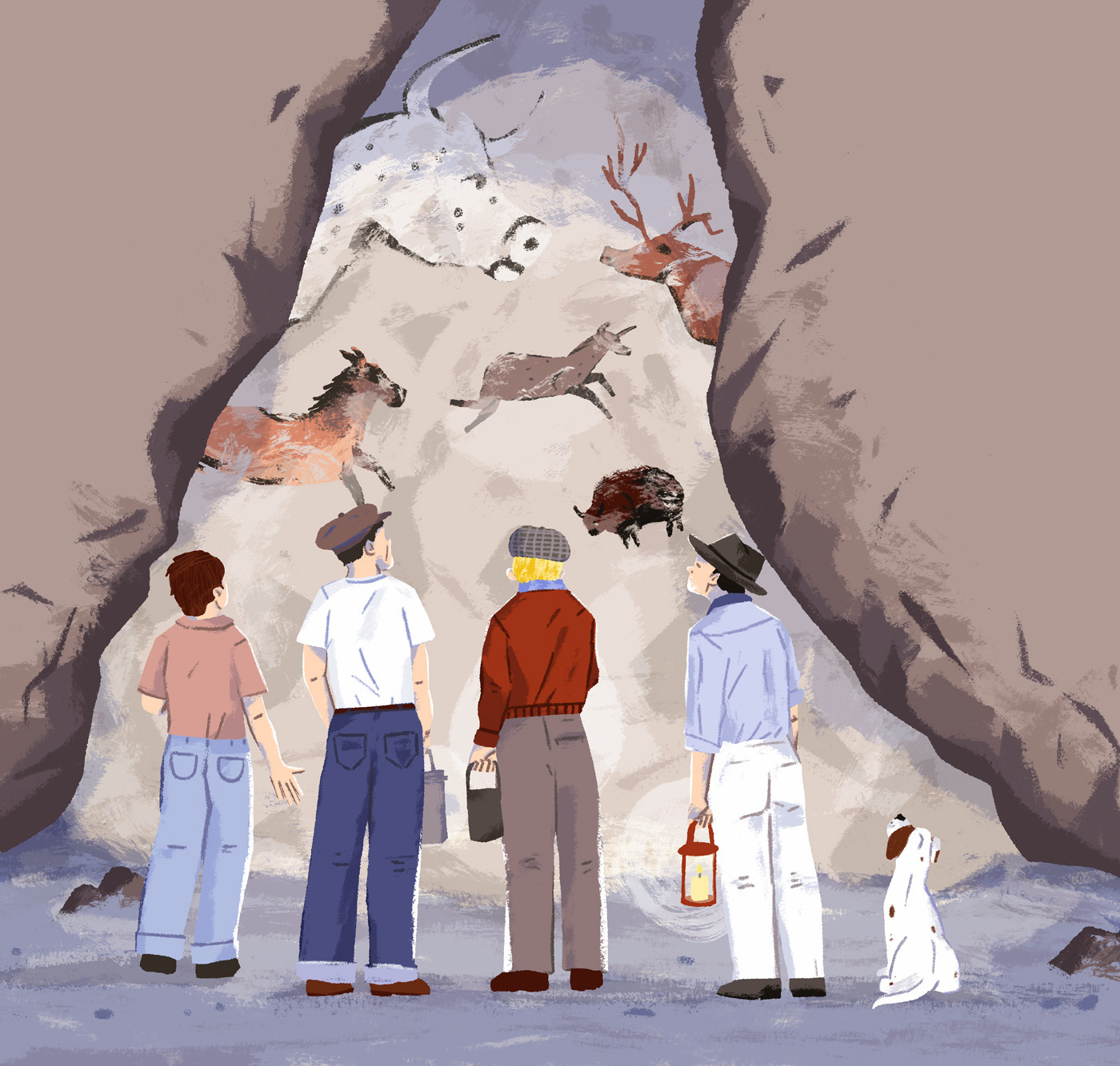
Four boys and their dog stumbled upon the Lascaux cave by accident.
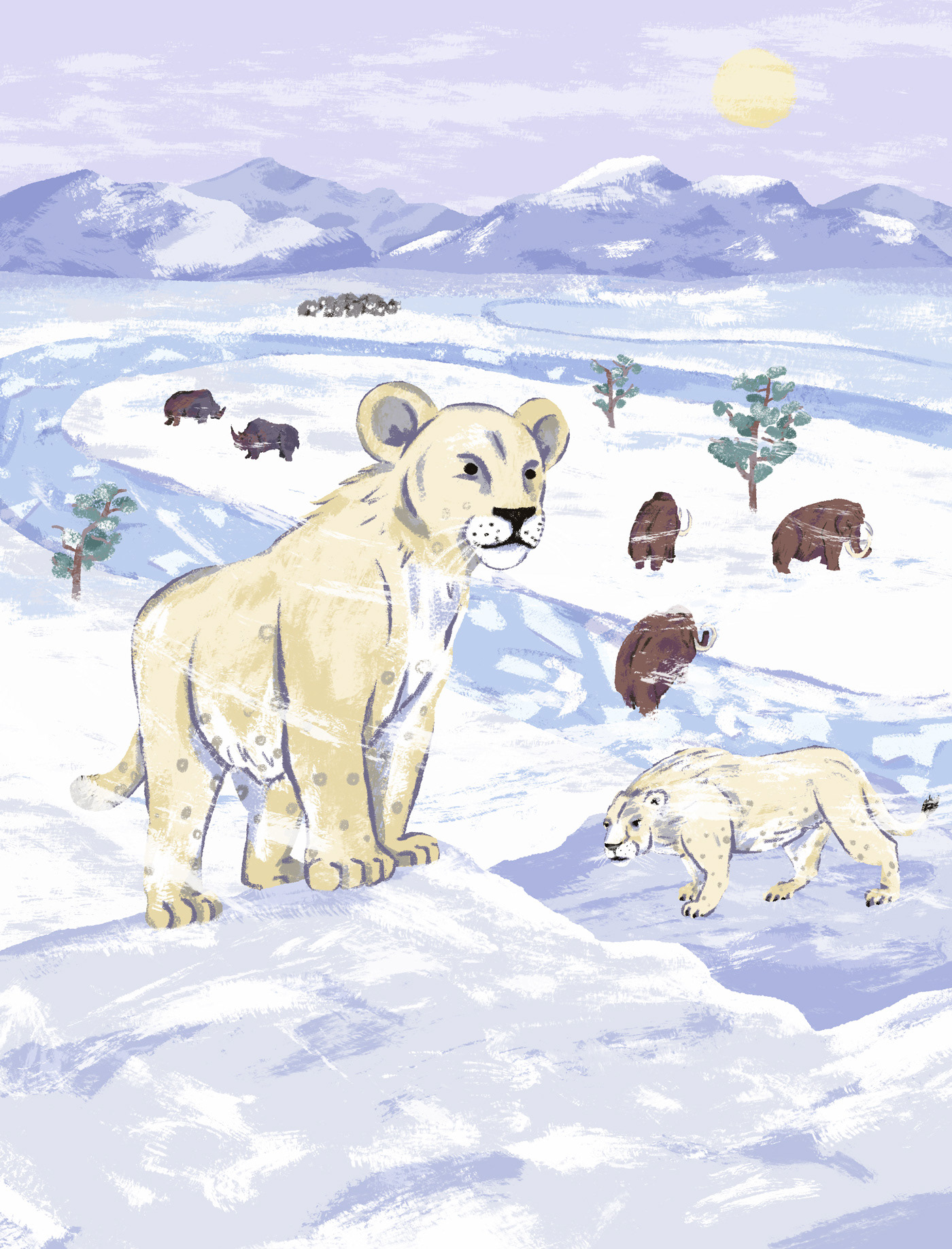
A young cave lion had thick fur to help it survive the harsh Ice Age conditions.
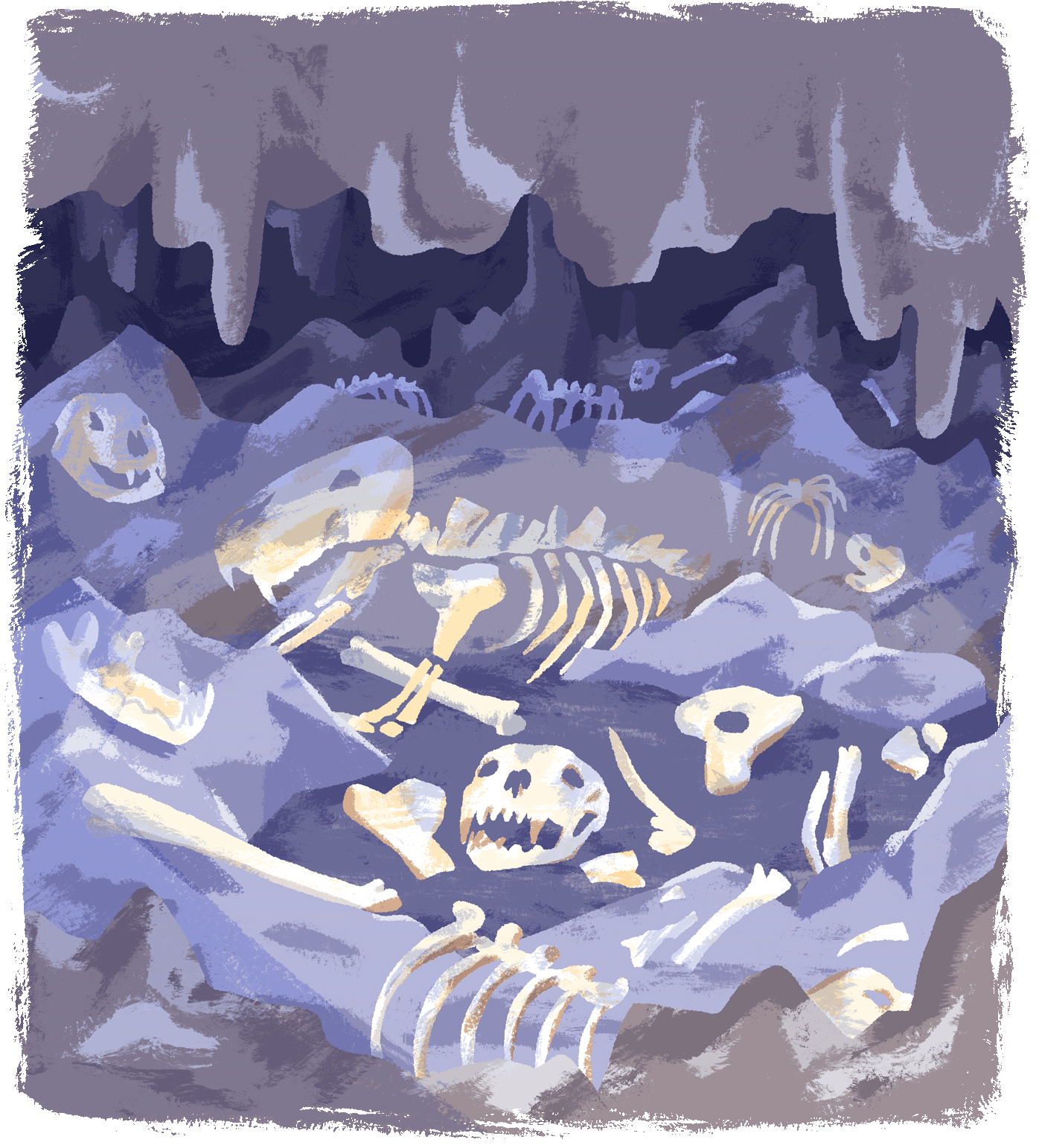
What we know about prehistoric animals comes from ancient bones found in caves.
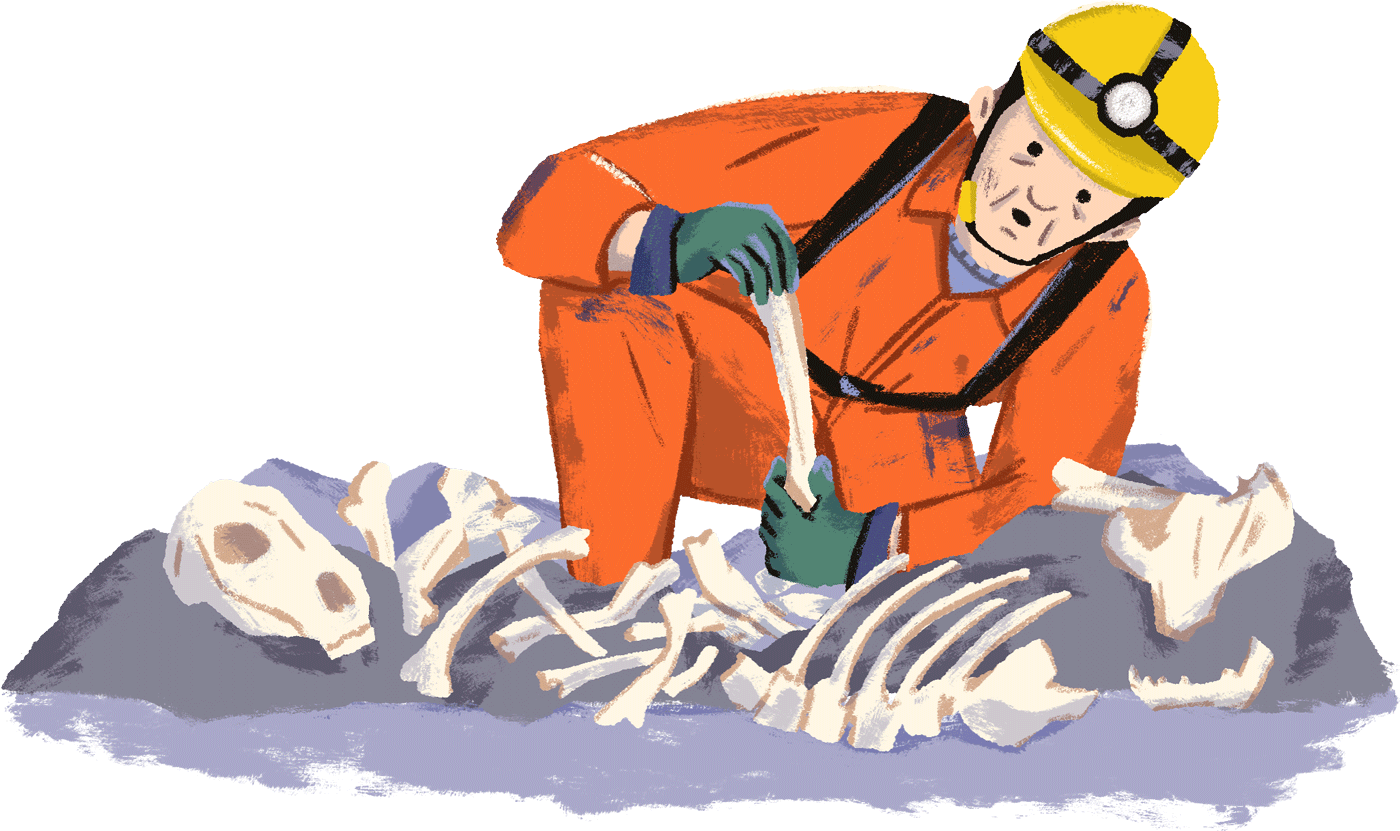
We owe our knowledge to speleologists, venturing into dark, deep caves to recover ancient bones.
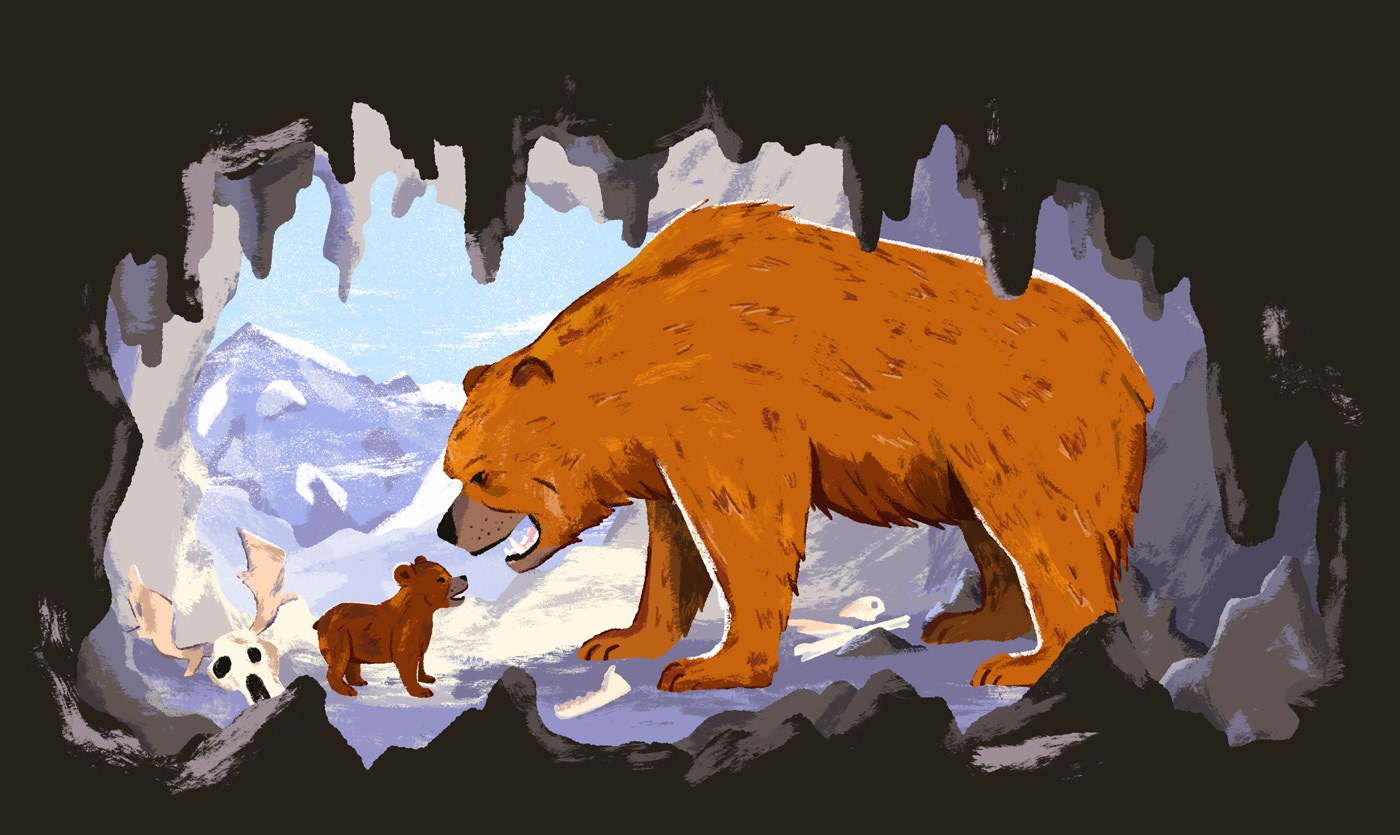
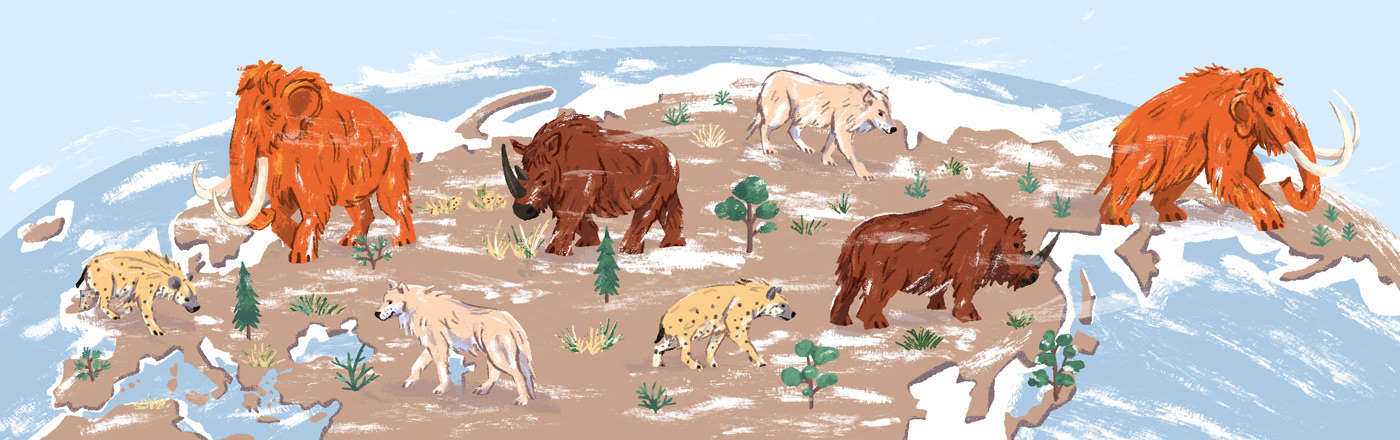
Even though Pleistocene animals resembled modern species, they tended to be bigger and more robust, better suited for the tough environments of the Ice Age.
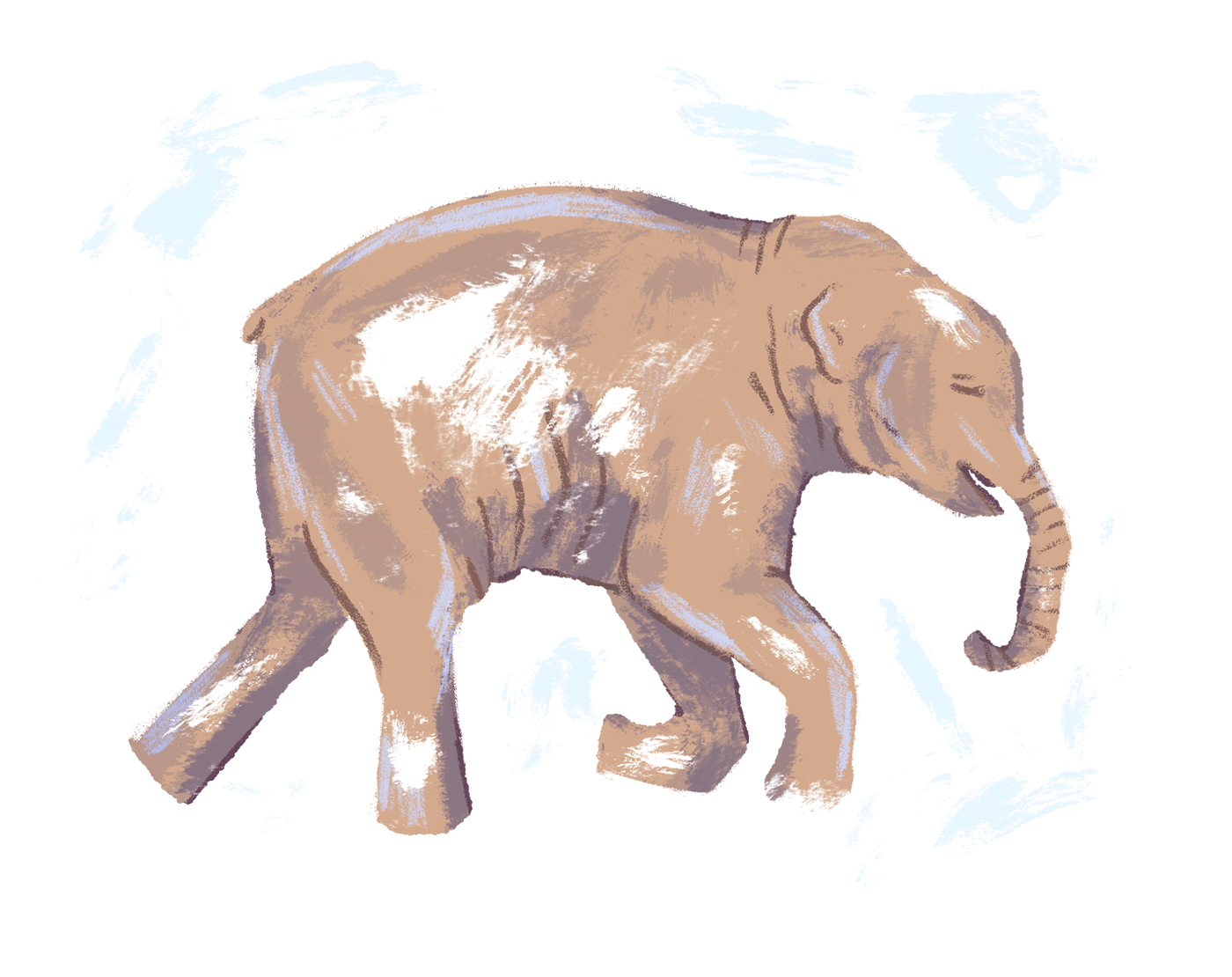
It wasn’t just bones that were found. This is Lyuba, a well-preserved woolly mammoth calf
discovered in the Siberian permafrost.
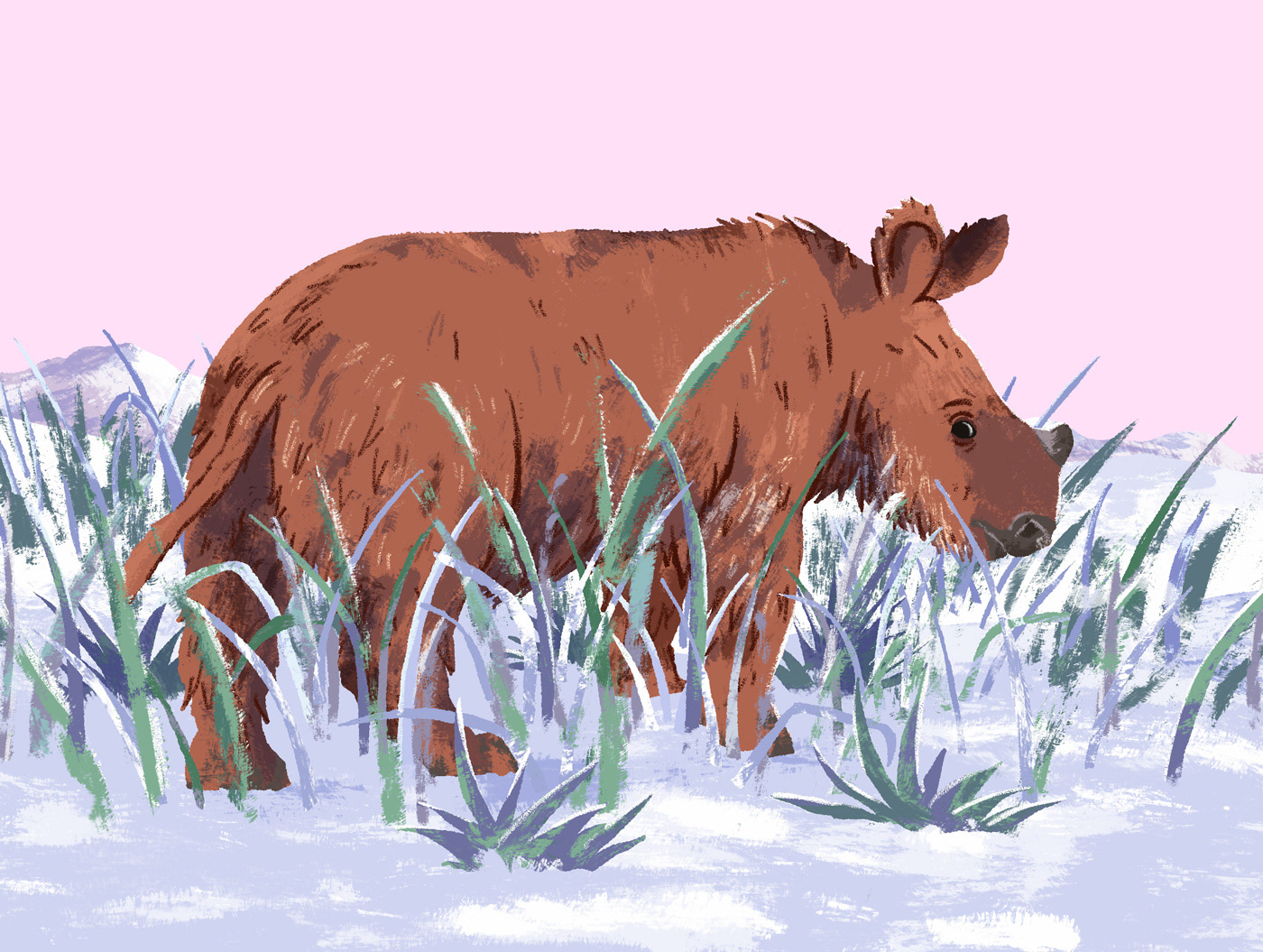
A young woolly rhinoceros roaming the frozen tundra in search of food.
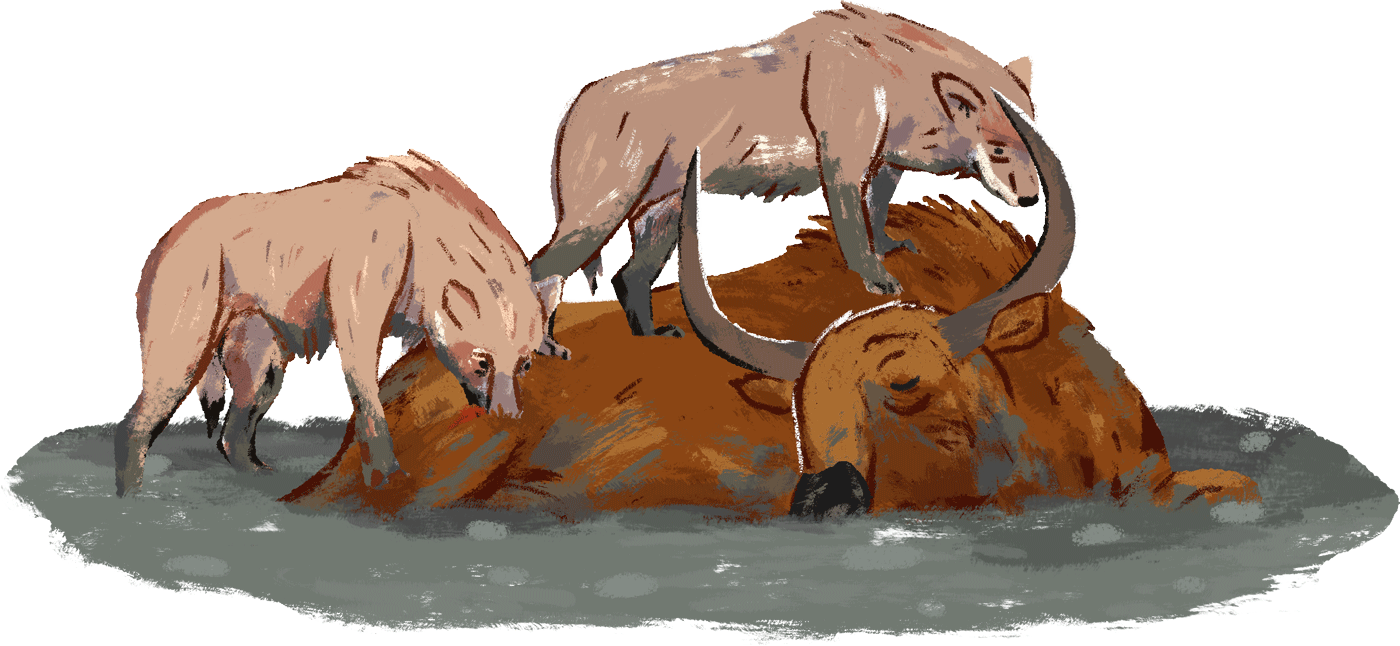
Dire wolves ripping apart a buffalo trapped in the swamp. Life was brutal back then.
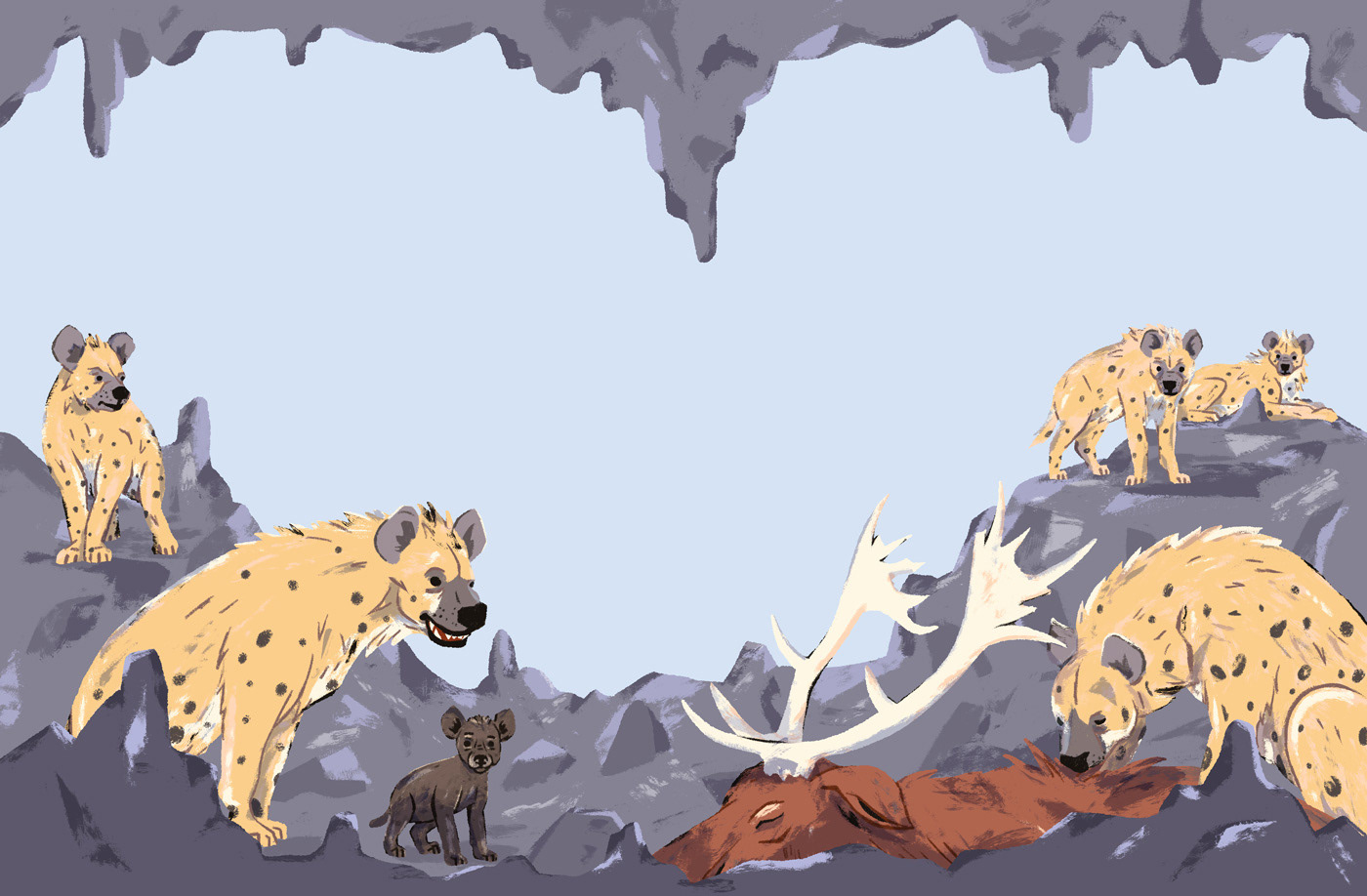
Big illustration of cave hyenas feeding on a dead deer. Surrounding space is reserved for text.
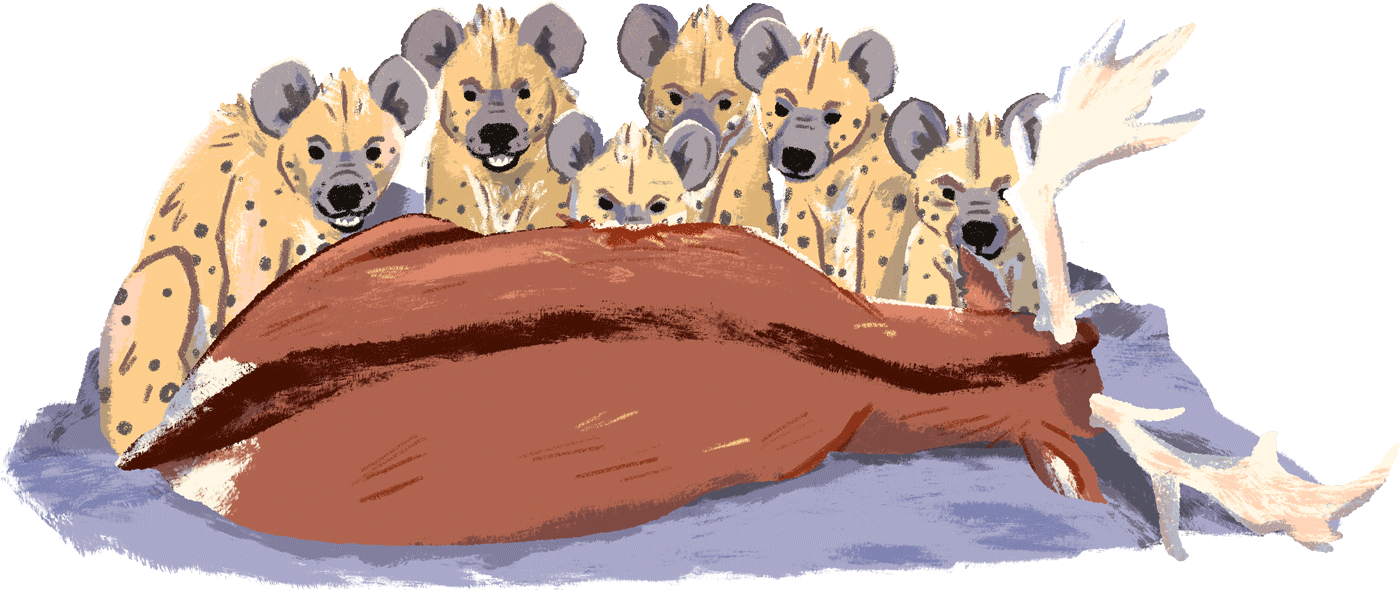
The book features a variety of illustrations. Each chapter begins with a double-page spread, followed by standalone illustrations on the subsequent pages.
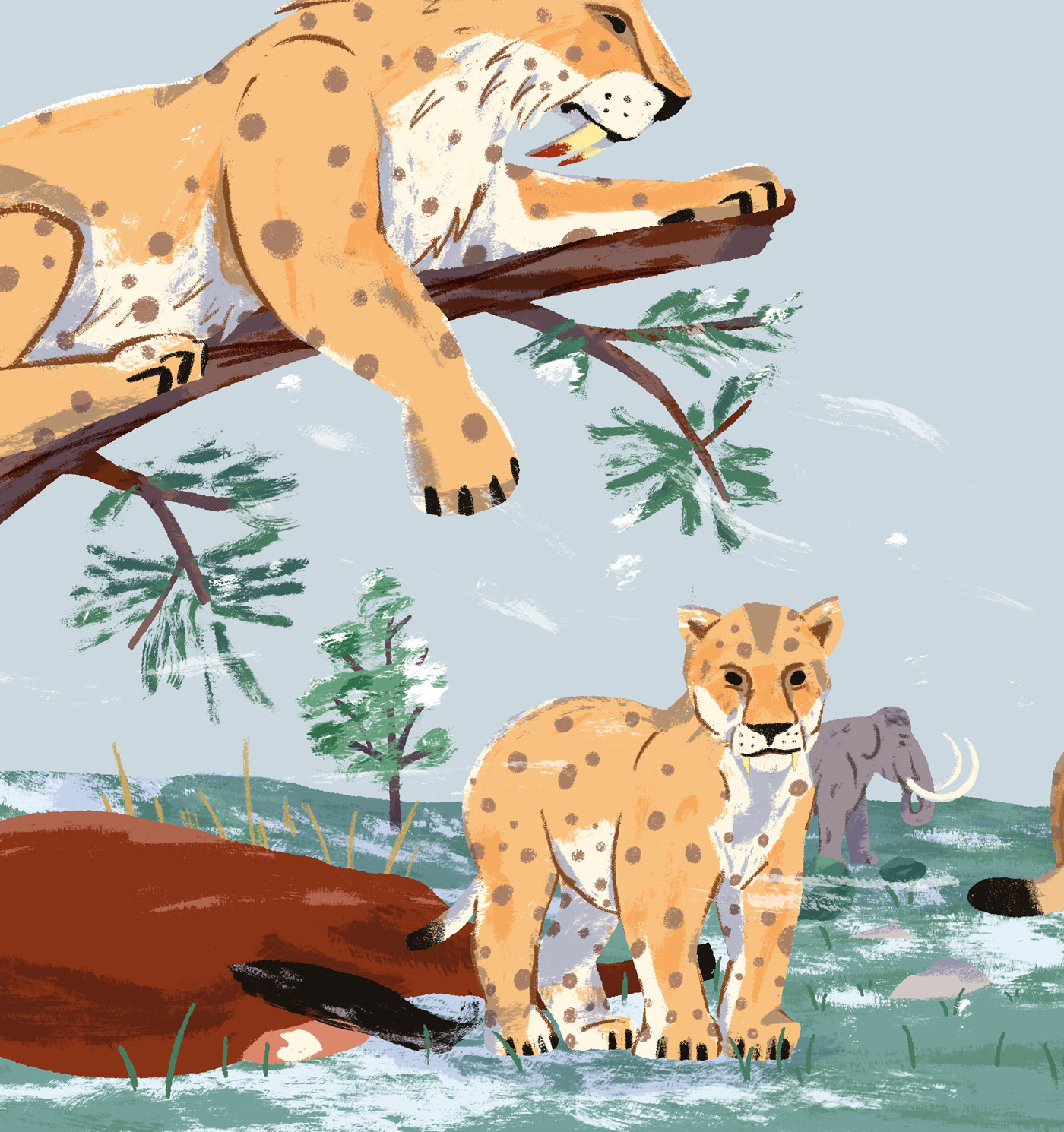
An illustration of a young Smilodon, better known as the saber-toothed tiger, being taught to hunt.
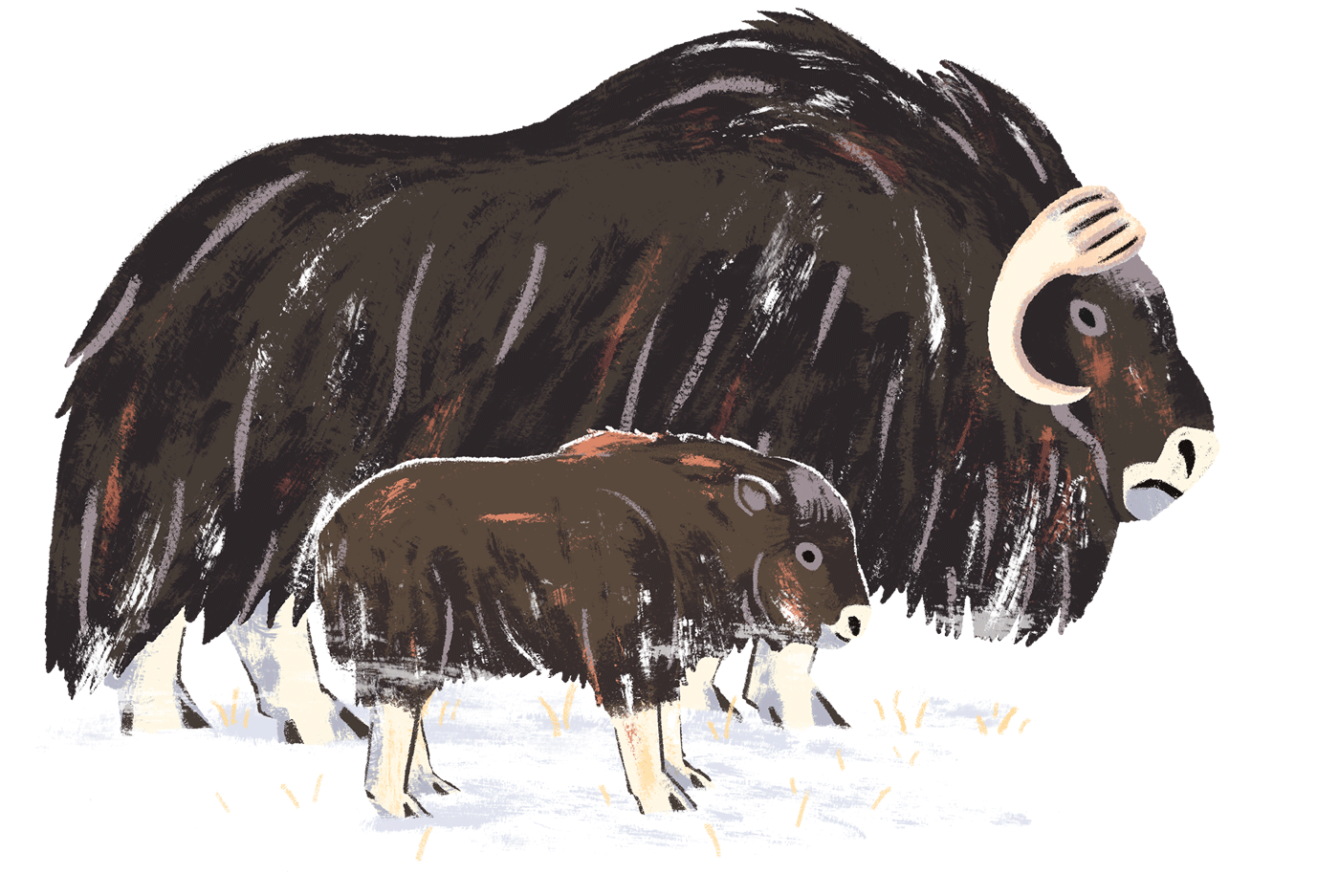
Musk oxen are fiercely protective, surrounding their calves with a tight defensive circle.
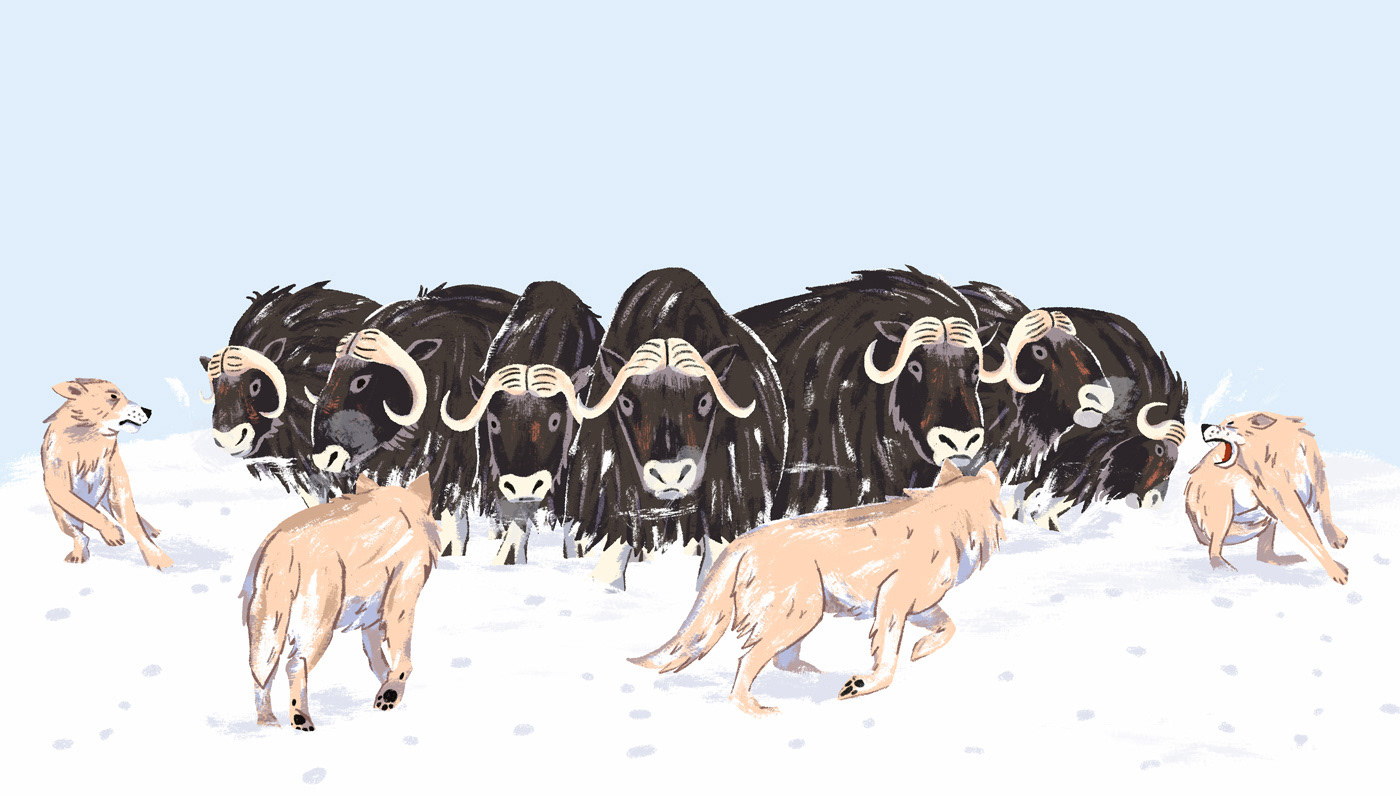
Musk oxen are living fossils, surviving the Ice Age and still roaming landscapes similar to those of the Pleistocene.
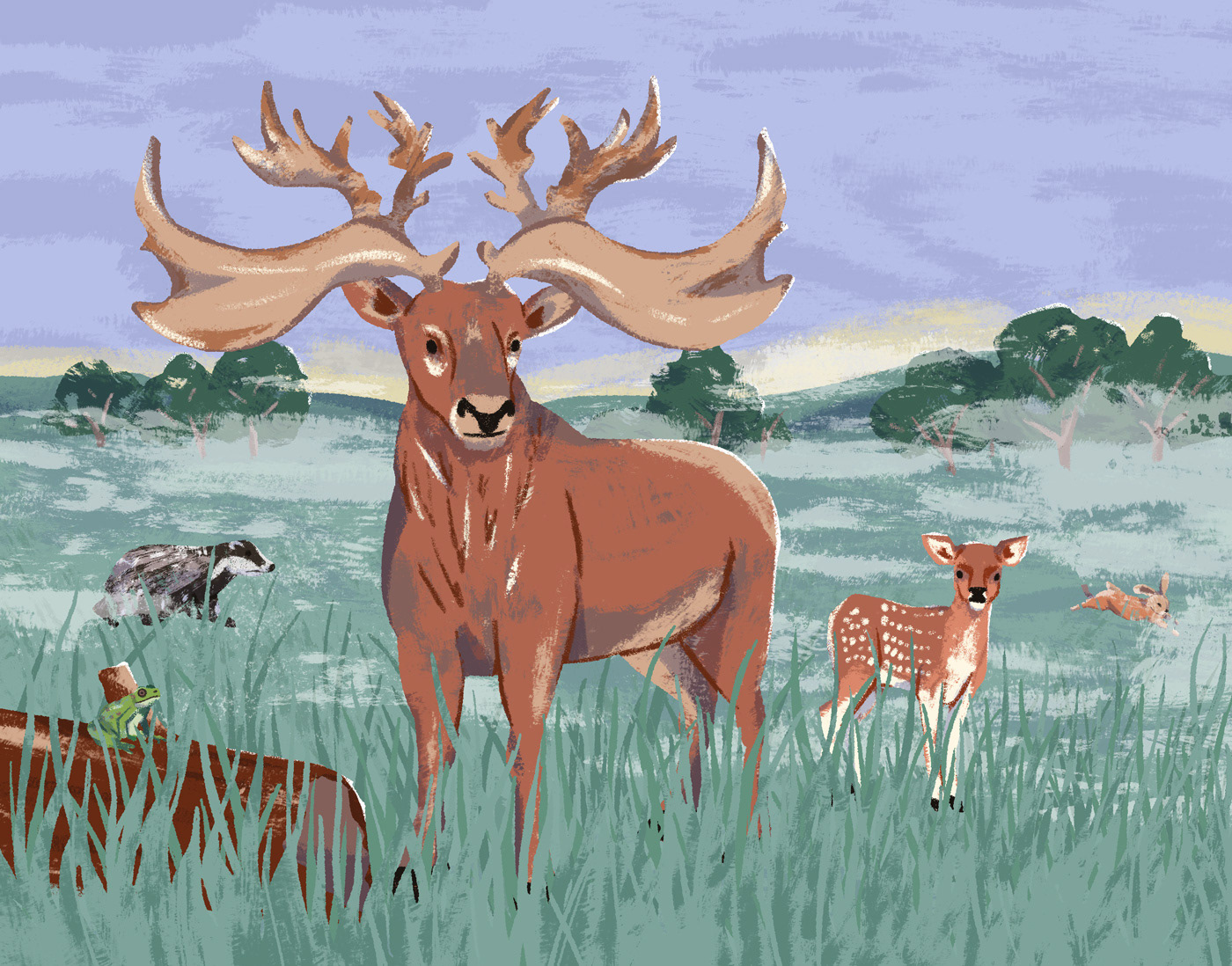
Pleistocene fauna gradually evolved into species that look more like the animals we know today.